
Quick Summary
The Nanticoke Lenni-Lenape Tribal Nation traces its roots across 10,000 years of continuous presence on Mid-Atlantic ancestral homelands. Two distinct peoples, the Nanticoke and the Lenni-Lenape, merged through shared displacement and kinship into one unified community. Despite centuries of forced assimilation, broken treaties, and efforts to erase Indigenous identity, the Nation reorganized formally in the 1970s and earned New Jersey state recognition in 1982. Cultural traditions remain active and central to community life today
Ten thousand years of history do not fade slowly into the background. The Nanticoke tribe’s history stretches back further than most people realize, rooted in the Mid-Atlantic landscape long before it had the names we use today.
The Nanticoke Lenni-Lenape Tribal Nation holds that history as a living, breathing part of who we are as a people and a community. Let’s explore where we come from, how our two peoples became one, and what our culture looks like today.
The Nanticoke Tribe History: Who We Are and Where We Come From
Our ancestors were not one single people in the way history textbooks tend to describe Indigenous nations. We are the descendants of two distinct connected groups: the Nanticoke and the Lenni-Lenape.
The Lenni-Lenape (whose name translates to “Original People”) lived across what is now New Jersey, Delaware, eastern Pennsylvania, and southern New York. They organized their communities into three primary clans: the Wolf (Tùkwsit), the Turtle (Pùkuwànku), and the Turkey (Pële).
Leadership and lineage passed through the mother’s line, making theirs a matrilineal society. Families lived near rivers, forests, and fertile land, shaping their food systems, seasonal movements, and cultural traditions in relation to the natural world.
The Nanticoke (historically known as the Tidewater People) occupied lands along the Nanticoke River in present-day Maryland and the Indian River in southeastern Delaware. From the early 1600s, they resisted colonial encroachment with organized effort. The people maintained fishing grounds, agricultural fields, and river routes that connected communities across the region.
As colonial pressures pushed both peoples from their lands throughout the 1700s, Nanticoke families traveled north along the Delaware River and its tributaries. There, they encountered Lenape families who had remained in New Jersey. From shared ancestry and experience, a unified community took shape. You can read more about this story in depth on our Nanticoke Lenni-Lenape history page.
Treaties Made and Broken
The tribe was not passive in the face of European expansion. The Lenni-Lenape were among the first Indigenous nations to sign treaties with European settlers, attempting to negotiate peaceful co-existence on their own terms.
In 1778, Lenni-Lenape leaders signed the first treaty made by the United States after the Declaration of Independence. In exchange for military support, federal representatives promised future statehood. That promise was never kept.
The 1800s brought waves of assimilation programs designed to erase Native identity. Language was suppressed, and traditions were pushed underground. Yet through congregation life, family bonds, and the quiet persistence of inherited knowledge, our community survived. Governance continued through informal family clan structures for generations, carrying cultural memory forward even when doing so openly was dangerous.
A People Reorganized, a Culture Reclaimed
Formal reorganization of the Nanticoke Lenni-Lenape Tribal Nation began in the late 1960s and early 1970s. The process gained legal footing when Congress passed the American Indian Religious Freedom Act in 1978, finally protecting Native Americans’ rights to practice their spiritual traditions openly.
In 1982, the New Jersey Senate formally acknowledged us through Concurrent Resolution No. 73, recognizing our confederation of Nanticoke and Lenni-Lenape peoples.
We are a New Jersey state-recognized tribe, headquartered in Bridgeton, NJ, an area long known locally as “Indian Town.” Federal recognition is a goal we continue to pursue. To learn more about our community and how to become part of it, visit our tribal enrollment page.
One thing worth noting: we are a non-gaming tribe. Our Tribal Council passed a law forbidding participation in casino gaming and the sale of cigarettes or alcohol. Our path to economic development and cultural preservation takes a different direction, grounded in education, community service, and cultural continuity.
The Meaning Woven Into Our Culture
Culture is the way a community makes sense of itself across time. For us, it lives in the drum, the dance, the regalia, and the stories passed from one generation to the next.
As our Chief Mark “Quiet Hawk” Gould has said, “There is no point in the survival of our people if our traditions, our songs, our crafts do not survive with it.” Here are some of the living cultural traditions that define who we are:
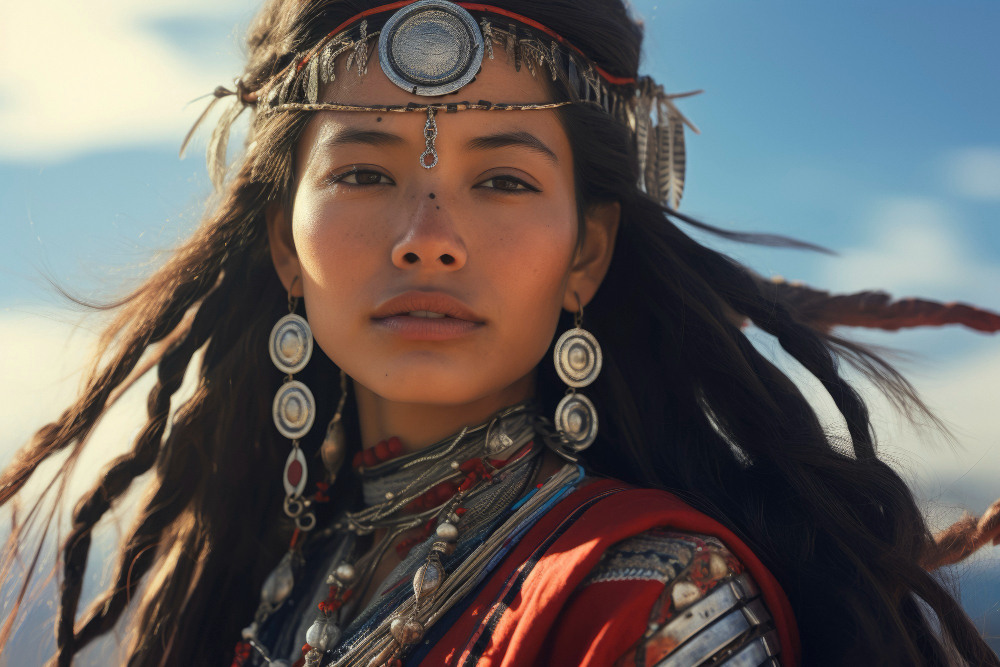
- Regalia: Regalia is not a costume. Every piece carries meaning connected to family lineage, community responsibilities, and personal teachings. Beads, quills, leather, and woven elements come together in garments that tell a story. Before any regalia is worn in a ceremony, it is blessed. Children learn the craft gradually, beginning with small skills like threading beads and gradually growing into the full practice over time.
- Powwow: Our Annual Powwow in Bridgeton brings the community together to dance, sing, and celebrate. Dances include Traditional, Jingle, Grass, and Fancy Shawl styles. Traditional dances tell stories of bravery or the hunt. Voice and drums are the only instruments used. Many dances are social celebrations of culture and pride, while religious ceremonies are kept within the community.
- Dance traditions: Men dance with energy, often wearing bear claw accessories. Women move with steady grace, advancing gradually through the circle. Both styles carry distinct meaning and form a visible expression of cultural identity.
- Pahsaheman: Our traditional game resembles a football-like competition, divided by gender. Men could only move the ball with their feet. Women could carry, pass, or kick, and were free to tackle the men, though men could not tackle women carrying the ball. More than a game, it represents the balance and cooperation embedded in our community life.
- Plant knowledge: Herbalism has long been part of our cultural fabric, carried primarily by women. Knowledge of plant life and its healing properties has passed through generations, sometimes alongside ceremony.
The Homeland Has Never Been Abandoned
One of the most persistent misunderstandings about Indigenous peoples is the idea that they belong to the past. Schoolchildren across New Jersey and beyond were taught about the Lenape and Nanticoke in the past tense, as if our story ended somewhere in the 1700s.
Our ancestral homeland spans river systems, marshlands, and coastal forests across the Delaware Bay region. Those landscapes shaped how we ate, how we moved, and how we held ceremonies. Connection to land is present in our teachings, our programs, and our daily life as a community.
The Little Acorns youth group, our health and wellness programs, and our ongoing cultural events are all expressions of that connection. Our people are still here, still on this land, still teaching the next generation what it means to carry this heritage forward.
Our Story Continues
The Nanticoke Lenni-Lenape Tribal Nation is not a chapter in a history book. We are a living community with ongoing programs, active cultural traditions, and a future we are shaping on our own terms. Our museum, the Turtle Trading Post, our youth programs, and our enrollment services all represent that passion for presence and continuity.
Want to learn more about our history, our culture, or how to connect with our community? Reach out to us today.
FAQs
They are two historically distinct groups who share deep cultural and geographic ties. Over centuries of migration and shared displacement, they unified into one community. Today, the Nanticoke Lenni-Lenape Tribal Nation represents that combined heritage as a New Jersey state-recognized tribe.
Not yet. The Nation holds New Jersey state recognition, granted in 1982. Federal recognition remains an active goal that the Tribal Nation continues to pursue through official channels.
Regalia carries personal, family, and spiritual meaning. Unlike a costume, each piece is intentionally crafted and blessed before use. Wearing regalia at a powwow is an expression of identity, lineage, and cultural continuity, not performance or decoration.
